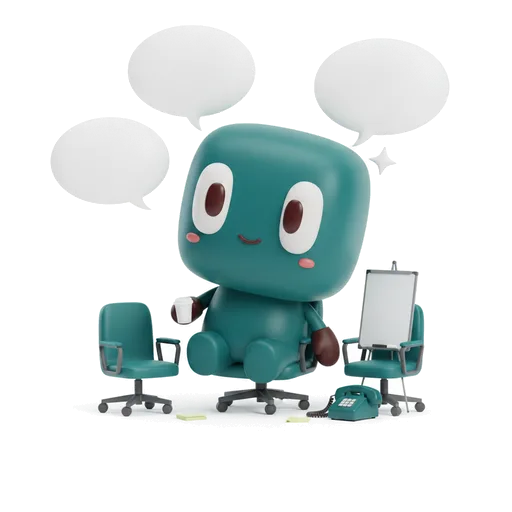
“The Quiet Mind Reader”
INFJ at work — sitting quietly in the corner of the meeting, reading every single thing nobody said out loud
INFJ · The Gentle Force
Already read the whole room and said nothing. Their own thoughts? Vault-grade security.
"You don't have to say it. I already picked it up"
Quiet, but built on convictions that don't bend. You read people deep, and you genuinely want the world to come out better.
Link copied!
Soft on the outside, load-bearing values on the inside. You catch what other people are feeling like it's telepathy, and helping them is where the meaning lives.
Trying to be good to everyone is exactly how you burn yourself down to the wick. Every so often you need the small selfishness of putting yourself first.
Strengths
- •Insight that goes further down than most people bother to go
- •Convictions that hold, and the honesty to match them
- •The quiet kind of influence that moves people anyway
Watch out for
- •Swallowing it and swallowing it until it all comes out at once
- •Setting the bar so high that reality keeps letting you down
In relationships
Once you open the door it goes soul-deep. Just don't sit there alone chewing on it — say the thing out loud.
At work & study
Where people and meaning are on the line, you'll give everything you have. Work that clashes with your values, you won't last long in.
Compatibility
Great match
Takes some work
INFJ chemistry — friendship and romance, scored separately
Best three as friends
Best three as partners
Pair with any type — including what trips you up
See all 136 pairingsINFJ deep dive
INFJ is the rarest of the 16 types, and probably the most misunderstood. On the outside: quiet, easygoing, agreeable. On the inside: a conviction lodged deep that the world should not be the way it is, and it does not budge. And here's the strange part — they read other people's feelings at nearly telepathic range while showing their own to absolutely nobody. Let's get into why INFJs live like that.
What INFJs are like — soft on the surface, unbendable underneath
Meet an INFJ and you'll think: nice person, great listener. Spend a little time around them and you find out something else — there's one line inside them that does not bend. They'll accommodate you, smile along, go with the flow, and then hit a question that touches their values and go stone-hard out of nowhere. Once "no, this is wrong" comes out of an INFJ's mouth, negotiation is over.
And INFJs don't so much read people as absorb them. You can smile and say "I'm fine" and one wobble in your voice tells them you're not. That's where the empathy comes from, and it's also the curse — other people's moods come straight across into their own body, so a few hours in a crowded room leaves them drained for no reason they can name.
Here's the part that confuses everyone. All that reading of other people, and they never put their own stuff on the table. They'll understand you, absorb whatever you bring, and then you ask "so how have you been?" and get "oh, I'm good." They swallow it all privately — and one day, quietly, they close the door. That's the genuinely unnerving thing about INFJs.
INFJs in love — slow to open the door, then it's soul-deep
INFJs are bad at the casual talking-stage thing. They watch, they take a long time deciding whether you're the real deal, they crack the inner door open an inch at a time. It's slow. But once that door is actually open, it's a different story — they let you into the deepest room in their world, and dating stops being "seeing someone" and becomes something closer to sharing a soul.
They're clumsy with words, so they take care of you by reading the whole of you instead. You mention in passing that your shoulder's been bothering you, and a week later they casually bring up a stretch that might help. But there's one thing they cannot do: say they're hurt. "That thing the other day actually stung" — they can't get it out, so they chew on it alone for days, and meanwhile you have no idea why they've suddenly gone a little distant.
So if you're dating an INFJ, know this: when they go quiet, it doesn't mean nothing's wrong. It means they've already written an entire novel about it in their head. And INFJs, this one's for you — saying it out loud before you reach the verdict alone is the homework of your life.
INFJ compatibility — why ENTP and ENFP click, and ESTP takes work
INFJs do well with people who can shake the heaviness loose and drag their ideals out of their head into the actual world. An ENTP (the Debater) will take a thought an INFJ has been solemnly excavating alone and go "okay, but what if you flipped it?" — and INFJs secretly love that intellectual ping-pong. It buoys them up when they're sinking. An ENFP (the Campaigner) knocks on that closed door with sheer brightness until it opens — feelings an INFJ has been nursing in private somehow come pouring out in front of an ENFP.
ESTP (the Entrepreneur), on the other hand, grinds a bit at first. ESTPs live on this moment and what's right in front of them; INFJs live on invisible meaning and whatever's over the horizon. ESTP says "stop thinking, just go," INFJ says "why we're doing it comes first," and both walk away frustrated. Except this isn't incompatibility, it's a missing translator — an ESTP can haul an INFJ out of the swamp of overthinking, and an INFJ can lend an ESTP the lens of meaning. Each ends up supplying exactly what the other one doesn't have.
When INFJs struggle most — the swallow, swallow, detonate cycle
The most dangerous thing an INFJ does has a name: the door slam. They don't say it when they're hurt or let down — they hold it. They understand, they let it slide, they hold it again. Then some threshold gets crossed and the person is simply erased from their heart. From the outside it looks like "where did that come from?" Inside the INFJ, it had been filling up for a very long time, and that was just the last drop over the rim.
The high ideals wear them down too. They carry a picture of how the world and people ought to be, and every time reality falls short of it they get quietly disappointed and sink. Things other people shrug off, an INFJ turns over for weeks: is this actually right?
And they burn themselves down trying to be good to everyone. They can't say no, so they take it all on; they track everybody else's mood while their own tank empties unnoticed. Then one day nothing sounds bearable and every person feels like too much — that burnout is usually the bill for how long the INFJ put themselves last.
Living well as an INFJ — learning the selfishness of going first
First lesson: say the small hurts while they're still small. Instead of holding everything and blowing at once, practice raising a 5-out-of-10 grievance while it's still a 5. "Honestly, that stung a little" — the single hardest sentence in the INFJ language, and the only brake that stops the door slam.
Take recovery time alone without paying the guilt tax on it. For an INFJ, solitude isn't laziness — it's the necessary process of emptying a battery that's full of other people's feelings. An evening with nothing on the calendar, a quiet walk: not a luxury. That's the thing that makes helping people possible again tomorrow.
Last thing: stop trying to save the world and start with the one person in front of you. INFJ ideals run so big that it's easy to think "this is too small to matter" and never begin — and waiting for the perfect cause means doing nothing at all. Small, now, one person: be good to them. That's where an INFJ's real influence actually starts.
Careers that fit INFJ
- Counselor, therapist, or coach
- Writer, editor, or content strategist
- Teacher or educational content developer
- Nonprofit and advocacy work (NGOs)
- HR, org culture, or career consulting
- UX researcher or service designer
Put an INFJ somewhere that runs on numbers, quotas, and competition with no visible answer to "why are we doing this," and they wilt quietly. The more meaning and actual people are on the line, the stronger they get.
INFJ frequently asked
Why do INFJs read everyone else but never open up themselves?
Other people's feelings come in automatically; their own get run through a calculation first — "if I bring this up, is it going to be a burden?" Consideration became a habit, and the muscle for saying what's actually going on inside never got trained. So for an INFJ, replacing "I'm fine" with the real answer is a lifelong practice.
Which MBTI type is the best match for an INFJ?
ENTP and ENFP usually get named. Both of them lift an INFJ back up when they're sinking under their own weight, and both knock brightly on that closed door until it opens, so the gaps line up well. Compatibility charts are only a reference, though. The person who actually fits best is the one who asks about the silence and then waits for the answer.
What careers suit an INFJ?
Work where people and meaning are on the line at the same time. Counseling, psychology, coaching, writing and planning, education, nonprofit work — INFJs shine there. On the flip side, a job that's all numbers with no visible reason behind it won't hold them no matter how good the package is. Meaning is the fuel, and without it an INFJ runs flat fast.
What should an INFJ watch out for in a relationship?
Swallowing every hurt and then shutting the door for good — the famous door slam. Inside the INFJ it's been accumulating for months; to the other person it comes out of nowhere. Raise the 5-out-of-10 grievance while it's still a 5: "that stung, back then." Hardest thing in the world for an INFJ, and the only thing that saves the relationship.
What's the difference between INFJ and INFP?
Both quiet, both warm, both carrying high ideals, which is exactly why people mix them up — but the reference point is different. An INFP runs on "my values, my feelings," which makes them freer and more spontaneous; an INFJ runs on other people and the big picture, which makes them more planned and structured. INFP drifts wherever the heart goes, INFJ pushes toward a meaning and a goal.