“The Walking Lab”
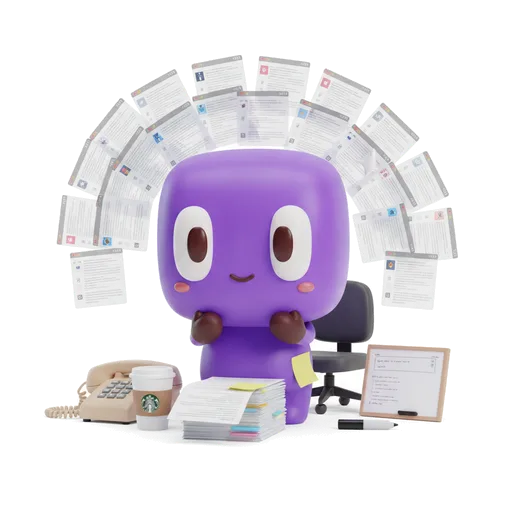
INTP at work — got one simple question and went so deep there are now twenty tabs open
INTP · The Why-Chaser
'But why?' is the factory setting. Once curious, it's suddenly 4 a.m.
""Hold on, but why does it work like that?""
You want to take the whole world apart and see what makes it tick. The thought lab in your head runs 24 hours a day.
Link copied!
Curiosity is the engine. Once something hooks you, you dig until you hit bedrock — and you start by doubting the assumption everyone else walked straight past.
Errands and reading the room aren't your strong suit. But drop you into ideas and logic and nobody moves more freely or invents more than you do.
Strengths
- •Analysis that cuts straight to what's actually going on
- •Ideas that don't care what shape the box was
- •An eye that sees it plainly, no bias attached
Watch out for
- •Thinking it through so thoroughly you never quite start
- •Letting anything boring or fiddly slide, indefinitely
In relationships
Saying the feelings out loud is awkward, but you work hard at understanding someone properly, in your own head-first way. Find a person you can really talk with and you're gone.
At work & study
You shine on problems with no known answer. Repetitive tasks and someone breathing down your neck drain the will right out of you.
Compatibility
Great match
Takes some work
INTP chemistry — friendship and romance, scored separately
Best three as friends
Best three as partners
Pair with any type — including what trips you up
See all 136 pairingsINTP deep dive
INTP is the type that looks blank on the outside while the inside runs 24/7. They can sit perfectly still while 'wait, why does that even work that way?' keeps rolling around in there. They question the premises everyone else waves through, and once something hooks them, they dig until they can see the mechanism. Let's open up that thought lab a little.
INTP traits — vacant on the outside, running nonstop inside
First impression of an INTP: laid-back, a little detached. But behind that blank face they're finding the hole in what you just said and quietly checking whether the premise even holds. The person who says nothing for the whole meeting and then drops the one sentence that names the actual problem — that's an INTP.
Curiosity is the engine. One topic catches and they're up until 3 a.m. riding Wikipedia into papers until they hit the bottom of it. Meanwhile the stuff they don't care about — paperwork, tidying the room, replying to messages — gets postponed indefinitely. It isn't incapacity: their brain files it as 'not interesting' and the ignition just won't turn over.
Feelings and social radar are the weak spot. They notice you were hurt about three days late, or freeze the room trying to tidy things up with facts. There's zero malice in it. For an INTP, 'what's true' and 'how it feels' are separate things, so being straight with you feels like the polite option.
INTP in love — once the conversation clicks, they're all in
For an INTP, 'can I actually talk to this person' comes before looks or vibe. Someone who can volley over something stupid, and who takes the weird hypothesis they float seriously — that's what gets them. If the conversation just slides around on the surface, nothing moves, no matter how good the rest of it looks on paper.
The expressing part is genuinely awkward. 'I miss you,' 'I like you' — those don't leave the mouth easily. Instead they show affection by analyzing your problem with you, or researching something you're into and reporting back. That's INTP-style love: trying to prove it through the effort of understanding you.
The thing to watch is the habit of loving with your head only. Your partner wants feeling and you keep trying to solve it logically, and eventually you hear 'you just analyze me.' Sometimes flipping the analysis switch off and saying 'that hurt my feelings too' does more than ten rounds of airtight reasoning.
INTP compatibility — why ENTJ and ENFJ click, and ESFJ is harder
INTPs match well with people who pull the ideas out into reality. ENTJ (the Commander) takes the thing an INTP has only been spinning around mentally and pushes with 'right, so here's how we execute it.' INTP analyzes, ENTJ decides — put them together and the thinking starts actually running. ENFJ (the Protagonist) covers the mood and the people-feelings the INTP misses, and gently translates their clumsy attempts at emotional expression, which puts an INTP at ease.
ESFJ (the Consul), on the other hand, grinds a bit at first. ESFJs care about harmony, looking after people, and doing things the proper way, while the INTP opens with 'why does it have to be that way, though?' — which reads to the ESFJ as cold and uncaring. But it's not incompatibility, it's a pair that needs a translator. If the INTP takes the ESFJ's attentiveness as a different language rather than as illogic, and the ESFJ reads the INTP's detachment as a factory setting rather than rudeness, they end up covering exactly what the other one lacks.
When INTPs struggle most — the thinking's done but the hands won't move
The thing that torments INTPs most is analysis paralysis. The simulation upstairs is flawless, and yet the first step never gets taken because there might be a better approach — and then the deadline passes. Trying to fully understand before starting turns into never starting at all.
Repetitive, tightly controlled environments wilt an INTP fast too. Somewhere that says follow the manual, do as you're told, and nothing else, the curiosity engine simply shuts off. And when fiddly admin — filing receipts, filling in forms — piles up, the stress spikes regardless of how capable they are.
There's relationship fatigue as well. Emotional labor, reading the room, small talk that goes nowhere: stretch that out and the battery hits zero. For an INTP, time alone to sort out their own thinking isn't a luxury, it's charging.
How to be a happier INTP — ship it at 60%
Loosen the habit of waiting until you understand everything before you start. Once you're about 60% of the way there, put out a draft and fill the rest in as you go. INTP insight usually doesn't show up while you're perfecting things at the desk — it shows up mid-collision.
Getting the thoughts out of your head helps enormously. Notes, diagrams, short write-ups: put it down and the loop stops running and turns into something you can act on. And the tasks you don't care about — automate them into a system or hand them off. Saving that energy for the problem actually worth digging into is INTP-style efficiency.
Last thing: treat emotional expression as a skill and practice it. It's training, not talent. Deliberately getting out one line — 'thank you,' or 'that hurt at the time' — is enough to make relationships grind a lot less.
Careers that fit INTP
- Developer, data analyst, engineer
- Researcher, scientist, academic
- Strategy, consulting, planning
- UX researcher / product designer
- Writer, critic, knowledge-content creator
- Logic-driven professions like law and patents
In a control-heavy place where you follow the manual and do exactly as told, day after day, the curiosity engine cuts out and the INTP wilts fast. The more freedom to dig at problems with no set answer, the stronger they get.
INTP frequently asked
Why do INTPs always ask 'but why?'
They're not picking a fight — they actually want to know. An INTP brain has to verify the premise before it can move to the next thought, so it can't just wave through what everyone else waves through. The question is an attempt to understand you, not to rebut you, so try not to take it as coldness.
Which MBTI type is the best match for an INTP?
ENTJ and ENFJ get named most. ENTJ turns INTP ideas into things that actually get executed, and ENFJ gently translates their clumsy emotional expression, so each fills the other's gap. But compatibility charts are only a reference — what really matters is someone the conversation clicks with who's willing to meet you halfway.
What careers or paths suit an INTP?
Anything where the answer isn't decided in advance and has to be dug out. Development, research, data analysis, strategy, UX research — roles that let you chase the 'why' and build new structures are where they shine. Repetitive, heavily controlled work exhausts them regardless of ability, so it's better avoided.
What should INTPs watch out for in relationships?
The habit of solving everything with logic. Your partner just wants to feel heard, you keep analyzing the problem, and eventually you hear 'you just analyze me.' Try leading with 'that hurt my feelings too' instead of a solution once in a while. It lands harder than ten rounds of reasoning.
What's the difference between INTP and INTJ?
Both are logical and independent, but the INTP opens possibilities up while the INTJ closes them into a conclusion. INTPs spread several hypotheses out and enjoy the could-be-this-could-be-that, improvising as they go; INTJs set a target and push it through on plan until it's done. INTP the explorer, INTJ the strategist.