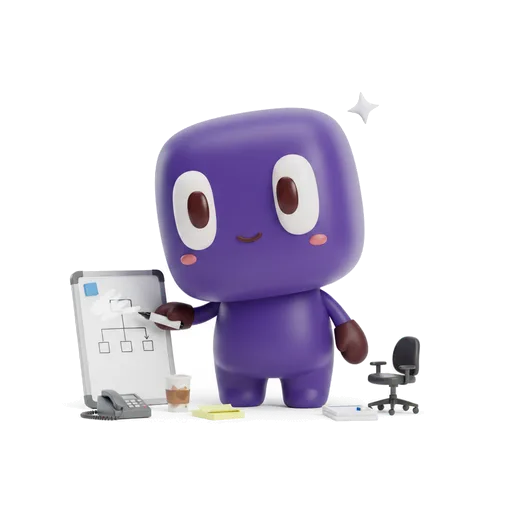
“The Forever Strategist”
INTJ at work — alone after the meeting, wiping the whiteboard while already sketching the next move
INTJ · The Long-Game Strategist
Already has a five-year plan in their head. This conversation is part of it.
"There's always a game board laid out in your head"
You don't say much, but you're already moving three steps ahead. You sketch the big picture, then push it through to the end.
Link copied!
You go deep on your own, building systems and mapping the whole board like it's a calling. While everyone else is asking "why go that far?", you've already worked out how it ends.
You're clumsy with feelings, so people read you as cold — really you're just an efficiency freak who won't waste words. Once you've locked onto a goal you go quiet, and you go all the way.
Strengths
- •Drive that doesn't quit once you've picked a target
- •A knack for turning a mess into a structure
- •Your own standard, and nobody nudges you off it
Watch out for
- •Treating your standard as the correct answer, until it just reads as stubborn
- •Filing 'checking in on people' under inefficient — and losing them over it
In relationships
You don't say much, but once you're in, you're in deep and you're serious. Just remember nobody can read the plan in your head. Sometimes you have to say it out loud.
At work & study
Give you a long project to design alone and you're unstoppable. Someone nagging over your shoulder or changing the spec on a whim? Instant shutdown.
Compatibility
Great match
Takes some work
INTJ chemistry — friendship and romance, scored separately
Best three as friends
Best three as partners
Pair with any type — including what trips you up
See all 136 pairingsINTJ deep dive
INTJ is the type that says the least and thinks the most. On the outside: flat expression, mildly unimpressed. On the inside: a board already mapped three moves ahead. While everyone else is reacting to what just happened, the INTJ has already sketched how it ends and is moving accordingly. Let's get a little deeper into what's going on inside that quiet strategist.
INTJ traits — a blank face outside, a system running inside
Almost every INTJ judgment starts from one question: is this efficient, does it fit the bigger picture? So when someone in a meeting circles the runway on pure feeling, 'okay, but what's the conclusion' pops up automatically in their head. The low word count isn't because they have nothing to say — they're rationing the pointless stuff. Watching a three-minute point take thirty minutes is physically painful.
There's always a blueprint running upstairs. To everyone else it looks like they're spacing out; really they're flipping the problem over, turning it around, building the structure. Hand an INTJ a tangled mess and they get weirdly excited — taking scattered pieces and folding them into one clean system is their specialty and their idea of fun.
The flaw shows up the moment 'my standard' becomes 'the correct answer.' They reached the conclusion by working it through logically, so the conviction sits heavy, and from the outside that reads as a wall of stubbornness. The thing is, the INTJ genuinely believes they judged on data rather than feelings, so they don't quite get why everyone finds them so immovable.
INTJ in love — short on words, but once they decide, that's it
INTJs can't drag out the will-they-won't-they phase. They watch, and the moment they think 'it's this person,' they decide — quietly, but completely. The trouble comes after. The feelings are serious and deep, but the expression is clumsy, so the other person is left wondering whether the INTJ even likes them. They've already designed the layout of the house you'll live in five years from now, and still can't get out a simple 'I missed you.'
INTJ affection comes out as action, not words. They remember the problem you mentioned in passing, go find a solution, and quietly have the thing you needed ready before you asked. But when what you wanted wasn't a fix — just to be heard — and out comes 'well, you could just do it this way,' that's where the fight starts. Filing emotional care under 'inefficient' is the biggest homework of an INTJ's relationships. Remember that love has to be said out loud before the other person knows it's there.
INTJ compatibility — why ENFP and ENTP click, and ESFP is harder
INTJs do well with someone who knocks on the door of their closed world and pushes it open. ENFP (the Campaigner) drags them out past the plan with that bright, spontaneous energy, and in return the INTJ gives the ENFP's scattered ideas a structure that actually rolls in the real world. Each fills exactly what the other is missing. With ENTP (the Debater), they can argue all night without getting tired — the ENTP gleefully takes apart whatever logic the INTJ built, and the INTJ's thinking comes out sturdier for it. Both play with ideas rather than feelings, so the conversation is a pleasure.
ESFP (the Entertainer), on the other hand, sounds like an alien language at first. ESFPs live on the fun of the current moment and the warmth of other people; INTJs live on long-range plans and solitary deep focus. To the INTJ, the ESFP looks reckless; to the ESFP, the INTJ looks stiff and no fun. But this isn't incompatibility so much as a pair that needs a translator — the ESFP can teach the INTJ how to enjoy right now, and the INTJ can teach the ESFP how to prepare for tomorrow. Learn each other's language and it turns into a surprisingly balanced combination.
The moments INTJs find hardest
Nothing drains an INTJ like an improvised change they can't control. Spend weeks building a plan, then watch someone flip it over with 'let's just go with my gut on this one' — outwardly calm, internally detonating. Situations that shift without logic, instructions with no reasoning behind them, constant nitpicking from the sidelines: put an INTJ in that and they wilt fast.
The other one is the emotional territory. Not being able to analyze a person's heart the way you'd analyze data is a quiet, ongoing frustration. When someone they care about is hurt for reasons they can't pin down, there's no manual for what to do, so they freeze instead. Then comes 'honestly, alone is easier,' and they pull a foot out of the relationship — and if that repeats enough times, they end up losing the very people they wanted to keep close.
How to be a happier INTJ
INTJs need to loosen the grip on 'I'll start once the design is perfect.' Polishing a plan to 90% is often the exact reason the start never happens. Once you've got about 70% of the picture, let it roll — the world doesn't move to plan anyway, and the INTJ's real strength is optimizing something already in motion, in real time.
And don't hold people to the efficiency ruler. Instead of throwing solutions at someone who needs comfort, practice one line: 'that sounds like it was really hard.' For an INTJ that's the least efficient, most awkward sentence in the world, but in a relationship it hits harder than any flawless solution. Add one habit of looking after people to that quiet, relentless drive toward the goal, and an INTJ becomes genuinely formidable.
Careers that fit INTJ
- Strategy planning / management consultant
- Researcher, scientist, engineer
- Software developer / systems architect
- Data analyst
- Licensed professions like law and accounting
- Founder / project lead
Put them somewhere instructions change without logic and someone's improvising over their shoulder all day, and they wilt fast. The more autonomy and the clearer the long-range goal, the stronger the INTJ gets.
INTJ frequently asked
Why do INTJs seem so cold?
It's not an absence of feeling — it's efficiency, rationing expression they've filed as unnecessary. Inside they may care about you enormously while the face barely moves. Read an INTJ's blank expression as the factory setting, not as disinterest. Get close to one and the surprisingly soft parts start slipping out.
Which MBTI type is the best match for an INTJ?
ENFP and ENTP get named most often. Both come knock brightly on the INTJ's closed world and open it up, and the INTJ rolls their scattered ideas into something real. Each fills the other's gap precisely. Of course compatibility charts are only a reference — in the end the best match is whoever's willing to put the work in.
What careers suit an INTJ?
They go off in work that lets them dig deep alone and design long projects. Strategy and consulting, research and engineering, development and data analysis, founding something — high-autonomy roles where you get to draw the big picture. Jobs that are mostly emotional labor and constant improvised response burn them out fast.
What should INTJs watch out for in relationships?
Fix-it mode — 'well, you could just do it this way.' Leading with a solution when your partner wanted comfort lands as dismissal. And expressing love only through actions while never saying it leaves the other person guessing. Sometimes you have to actually say 'I missed you' out loud.
What's the difference between INTJ and INTP?
Both are quiet and logical, but the INTJ is the conclude-and-execute type — once the target's set, they push it all the way. The INTP is the dig-into-possibilities type, enjoying the exploration more than the conclusion and leaving execution for later. Easiest way to hold it: the INTJ builds a board to win on, the INTP wants to understand why it works.